Stormy Raindrops

Painfully honest personal experiences with Mental Illness

This blog is not about a success story. It’s a personal rock bottom needing an outlet. This is the brutal reality living inside my head without censors.

Table of Contents

  • Post #11 The Day I Was Admitted To The Psychiatric Ward

    2010

    I woke up early morning feeling strange, unfazed by what was going on around me. I was alone in the studio; my husband had already left for work. The alarm was going off telling me it was my turn to go to work, but it meant nothing to me. I didn’t answer the phone calls from my employer wondering where I was. I ignored the calls from my husband checking in with me during the day. I didn’t even react when my husband came home that evening to find me where he left me. It was hard to respond to him and impossible to explain. I hadn’t eaten or taken my pills. I lay motionless all day barely processing anything.

    That evening, we knew a decision had to be made. I had been cutting myself to deal with the emotional pain I was going through at the time. It was a culmination of traumatic family circumstances beyond my control. It didn’t help that I was living across the country in Washington, DC, and making countless flights to and from my hometown in Portland, Oregon to deal with what was going on.

    My husband was scared for me and, in the back of my mind, we knew once you’ve been admitted into a psychiatric ward, there’s no going back. It’s in your medical records. Mental health providers will have access to them. You don’t know the future repercussions it may bring . . . background checks for employment, disability and life insurance.

    Ultimately, I was functionless, and I was helped to get dressed, get in the car, and my husband drove in the dark to the ER. There, my husband was given a lot of forms to complete, and I was laying on a bed curtained off from my husband and from other patients. It was all a blur. I was asked a lot of questions. I remember they asked if I wanted to kill myself. I said “no,” but I was better off dead. They put a form in front of me asking if I wanted to voluntarily be admitted into the psychiatric unit of the hospital. I signed.

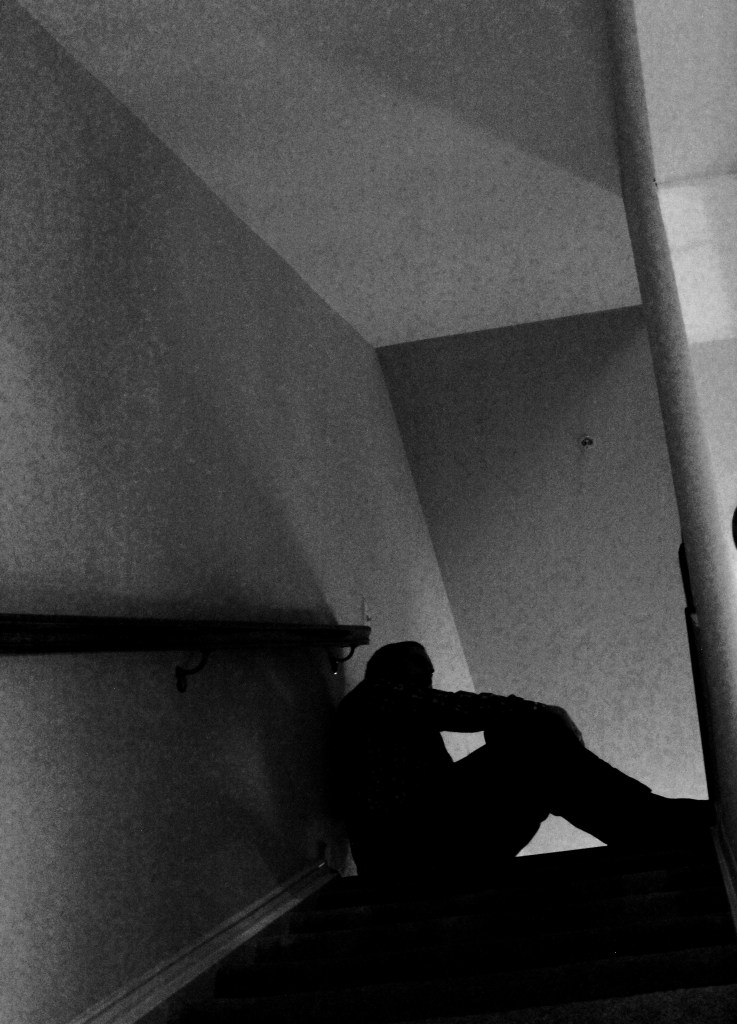
    I was escorted to the psychiatric ward at the hospital. It was dark and I walked down several hallways where I was assigned a bare room with a bed and table. I had no belongings. They gave me a blue fabric gown – the ones that tie in the back, disposable underwear, and disposable socks. I changed. I slept.

    Thank you for your comment!

  • Post #10 Neurocognitive Rehabilitation

    Because a year’s worth of electroconvulsive therapy (ECT) took away so much cognitive functioning and memory in 2022, I was referred to receive Neurocognitive Rehabilitation, which I called Brain Rehab for short, in 2023. It took place at a hospital in the same department that helps patients with dementia, Alzheimer’s, and brain injuries. What confused me was that I worked with a speech therapist, even though I had no problem speaking. She explained speech therapists cover the damage done anywhere above the shoulders, which includes the brain’s functioning.

    Brain Rehab relies on the brain’s neuroplasticity, meaning your brain can rewire itself to relearn old things and learn new things at any age. Your brain isn’t “fixed” your entire life – it can strengthen or weaken depending on how hard you work on a particular thought process or skill. My speech therapist said there are ways around the damage like a traffic accident; the brain can find and strengthen new pathways to get to the same destination.

    Calculated for my age group and education level, this was how I placed out of 100%:

    • 2% Memory
    • 17% Quantitative Reasoning and Speed
    • 16% Processing Speed and Attention

    Fortunately, there was nowhere else to go but up with hard work on new strategies and creation of new systems (processes, habits) in my life. These are just a few:

    • Utilizing brain games like Lumocity, Taboo, Scattergories
    • Establishing routines and structure in your day
    • Fatigue Management, such as listing what you have to do for the day but putting priorities FIRST on the list when you have the most energy
    • Strategic ways to use a calendar for medical appointments, birthdays, etc.
    • Learning the importance of exercise because more of it links to higher cognitive ability in research
    • Improving memory with attention and intention to a particular thing you want to remember
    • Using devices and and planners as reminders: alarms for taking medication, recording notes on cell phone, use of a white board on the fridge for lists, etc. These things are called the “external brain” to use as aids, kind of like using a cane for walking.
    • Creating a habit to go through the notes you took in previous days – otherwise, what’s the point of taking notes? 🙂
    • Maintaining focus on a task, such as mindfully repeating the task in a loop until the task is accomplished
    • Pairing tasks, such as doing a chore together with another related chore in close sequence to help with coordination, association, and making connections
    • Breaking down goals into small manageable chunks with reasonable work-rest intervals

    I’m grateful for receiving neurocognitive rehabilitation as it gave me the skills and motivation to keep using my brain for increasingly harder things, without feeling bad or stupid. I wasn’t ashamed to work on reading comprehension and sustained attention starting with children’s books.

    Learning about neuroplasticity just gave me so much confidence that I wouldn’t, for example, stay in the 2/100 percentile at memory forever. After about 3 – 4 months in 2023, I was able to practice the things I learned on my own without going to the clinic, and I haven’t been back since.

    Thank you for your comment!

  • Post #9 Electroconvulsive Therapy (ECT) Continued…

    The memory loss for me was the most difficult. I’m still dealing with loss of the level of cognitive functioning I had before ECT. But I don’t regret the year-long ECT treatments, because I may not be here writing this if I hadn’t.

    The memory loss varies with each person but it erased some long-term memory before I started ECT and it continues to affect my short-term memory 2 years after ECT. Usually, pictures jog my memory into remembering past experiences, but not always. I don’t remember 2022, the year I was given 40 ECT treatments. And I don’t remember 2023, the year I had to recover from the damage done by ECT treatments.

    I still struggle with some executive dysfunction such as sustained concentration, starting and finishing tasks, disorganization, overreaction to small setbacks, being overwhelmed very easily, difficulty calming down after stressful events, quitting books and new hobbies halfway through, and procrastination. I know this because I remember what I was capable of before ECT. I feel like I came out of it a different person.

    Husband: Do you want to watch a movie?

    Me: Yeah, let’s watch The Eternals!

    My husband frowns and he looks down at his feet, not happy about what he has to tell me.

    Husband: Bubby, you told me I had to be honest with you. We’ve already watched it 3 times in the last 3 months.

    My heart sinks.

    Me: No, we didn’t!

    Husband: I’m sorry, Bubby. We did.

    We had the same discussion several times. I was slow to think, react, and had difficulty following conversations. My handwriting was large and ugly. Reading comprehension was dreadful. I needed my husband’s help to finish my sentences.  

    And thank goodness – there is something you can do about it. Memories can come back and cognitive functioning can improve with Neurocognitive Rehabilitation; I called it Brain Rehab. Most about that in the next post…

    Like anything, you weigh the risks and rewards. In my case, coming out of depression alive was worth more than the side effects that resulted. Now, in June 2025, my depression is in remission now for a year, and I’m wholly grateful that I was able to receive the help that I did. There’s a cost to everything in life, but I’d rather be well than back to the living dead.

    Thank you for your comment!

  • Post #8 Hearts Breaking From My First Electroconvulsive Therapy

    Electroconvulsive Therapy (ECT) becomes necessary for some patients with mental illness (like major depression, bipolar disorder, and schizophrenia) that becomes severely disabling and when other treatments options fail. It’s also often considered the last-resort treatment.

    I had a total of 40 ECT treatments in 2022. It uses electric currents to trigger a seizure in the brain while under general anesthesia. The seizure is typically induced on the left hemisphere of the brain. Because I didn’t show improvement after several months with ECT, they then took a bilateral approach and triggered seizures on both the left and right hemispheres.  And once you start ECT on both hemispheres of the brain, you can’t go back to just the left hemisphere. There are more side effects this way, such as increased loss of short-term memory.

    Shortly thereafter, I woke up in another room and got my vitals taken. When I was conscious enough to move, I’m helped to a wheelchair and get wheeled out the long corridor of the hospital entrance where my husband was waiting for me outside next to the car.

    With bloodshot eyes, I looked up and smiled up at him.

    Me: “What are you doing here?”

    Husband: “I’m taking you home, Bubby.”

    “Oh,” I said. The nurse helped me out of the wheelchair and onto the car.

    We drove in silence for awhile.

    Me: Where are we going?”

    Husband: We’re going home, Bubby.

    Me: What month is it?

    Husband: It’s February, Bubby.

    We rode silently the rest of the way, and he led me upstairs to our bedroom where I slept for hours.

    I have very little memory of this. ECT wiped out most of my memory that year, so I happen to ask my husband about it, two years later. He paused, stared blankly at the wall, and started to cry uncontrollably. Oh my god, I thought. What have I done to him?

    Thank you for your comment!

  • Post #7 The Psychiatrist Who Didn’t Want Me Coming Back

    In 2009, I once had a Bad Apple Psychiatrist who had a practice right across the street from where I was working – it meant I didn’t have to take too much time leaving work for my appointments. I was his patient for depression and anxiety for a year and Mr. Bad Apple was mostly meds management, so I remember very little to no psychotherapy in my sessions with him. It was during this period that my depression level plummeted and I had to be hospitalized in 2010. This would be the first time out of three that I would be admitted to the psychiatric ward of a hospital.

    If you are hospitalized in a psych unit, you don’t work with your own psychiatrist – you work with a new psychiatrist at the hospital unit itself. There’s exchange of information between the two doctors, but the hospital psychiatrist gets to evaluate and decide if you stay on the same medications or change your existing prescription treatment. When I was ready to be discharged, the hospital psychiatrist contacted Mr. Bad Apple to update him upon my return to the outside.

    Guess what? Bad Apple Psychiatrist said he didn’t want me back. He told the hospital psychiatrist that I was a “troubled and non-compliant patient,” and he wanted me to continue outpatient care with another psychiatrist. The hospital psychiatrist talked to Mr. Bad Apple saying it was unethical to do that, and told me about it before discharge so that I was informed. Bad Apple Psychiatrist took me back reluctantly.

    It was kind of awkward seeing Mr. Bad Apple after something like that. Strangely, I stayed with him for a couple years thereafter. I don’t know why and looking back I shouldn’t have. I really didn’t have experience with psychiatrists to understand that I could have received much better care and treatment. I stupidly chose convenience above finding psychiatrists who truly had passion and purpose in their craft as mental health doctors.

    Luckily, I found that psychiatrist in 2020 and he’s stuck by my side to this day.  A psychiatrist who is truly concerned about your well-being makes all the difference in the world in how your mental illness gets managed. I mention this because you have a choice to divert course if something doesn’t feel right with your current psychiatrist. You don’t have to stick with a Bad Apple.

    Thank you for your comment!

  • Post #6 Permission to Live Without a Purpose When You’re Ill

    Personal Journal Excerpt

    “I wish I could stop fighting with myself that I can be doing better. I wish I could let go of the thought that I can control the amount of effort I put into something. I see the positivity in all this though, because it could mean I won’t settle for complacency. But at what cost? Why can’t I just let myself live without a reason.”

    I have a strong urge to be productive at all times – the only actions I valued were the ones that got things done that needed to get done. Employment. Grocery Shopping. Housework. I didn’t have any hobbies, I didn’t watch TV, I didn’t read for fun. It’s not uncommon I guess, to not know value of leisure and rest. But I had plenty of purpose, even if it was to fold the last load of laundry. At least that’s how I started out.

    I had some spirituality but it doesn’t come automatically to mind when I’m in pain. I wasn’t raised with religion, and there was no god coming to save me; if there was, he came too late. And I wasn’t raised with self-confidence – I believed you had to become something to deserve to feel good. By default, I was raised needing to prove myself, again and again and  again.

    Depression took away all the productive behaviors I valued, including my dream job. It stripped me of the things that gave me worth and value.  I had no choice but to learn to love what was left.

    It took years of psychotherapy just allowing myself to live without purpose. It was okay to just be laying there. It’s okay that I can’t get up. It’s okay my husband comes home from work and finds me still in bed with no lights on. It’s okay dinner wasn’t microwaved, it’s okay beds weren’t made, it’s okay nothing in the house was moved.

    The shame, the self-hate, the bitterness over the waste of your past efforts toward success, the loss of my potential – it does nothing for you. It only made things worse for me. If there is anything I get out of 3 years of depression, it’s that I finally found self-acceptance.

    Once you give yourself permission for your body to do what it needs to go through, to heal, despite what it may mean losing your self-worth and dignity, you come to terms to the life you live in. Even by doing nothing.

    Thank you for your comment!

  • Post #5 Cutting

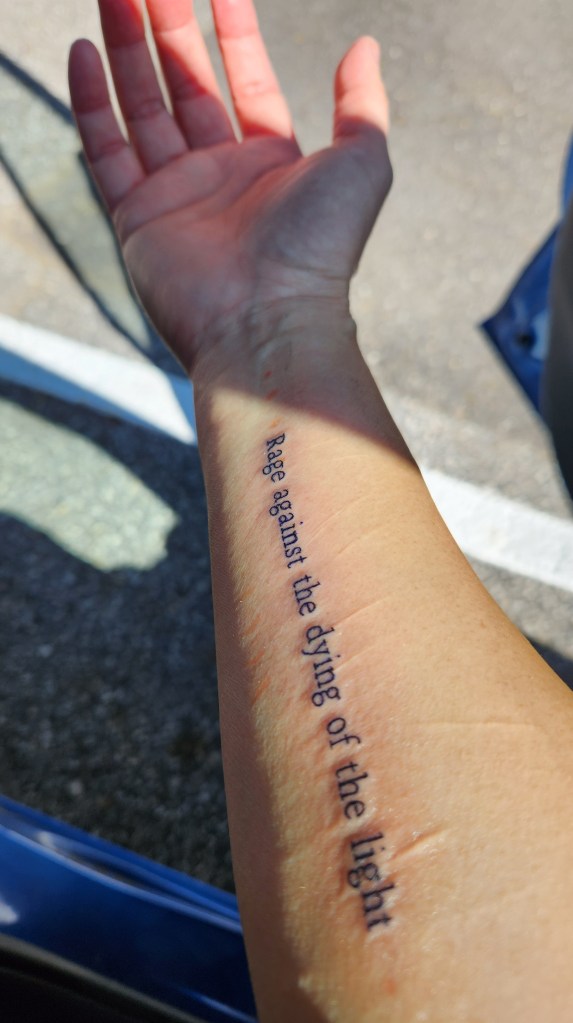
    During my most painful bouts of depression 10 and 15 years ago, I cut my arm for relief. I don’t have these urges any longer, but the scars are hard to ignore. I am not ashamed of these cuts and I let myself wear short sleeves now. I solely only wore long sleeves for work and still intend to for future work.

    I was eventually hospitalized the first time I started cutting, probably by my 6th or 7th cut. They were all what the doctors called superficial, meaning just on the surface, but some of them were deep enough to need butterfly bandages to close afterwards. I don’t know what even gave me that idea that cutting would help me. I just wanted to divert my thoughts through physical pain and the sight of blood oozing out.

    When you’re hospitalized in psych wards, they try to take anything away that you might use to harm yourself, like drawstrings, shoe laces, glass, metal, etc. I once surprised hospital staff by cutting myself with the bottom edge of my tube of toothpaste (the corners are sharp). They took it away and thereafter I had to ask for a squeeze of toothpaste at the front desk whenever I wanted to brush my teeth.

    This is when the psychiatrist at the hospital put me on an antipsychotic. I wasn’t hallucinating but I believed something that wasn’t true – I believed that cutting would help me. The antipsychotic turned out to be effective and stopped me from cutting for awhile.

    At the moment, I didn’t think of consequences when cutting; I was just desperate for some type of immediate relief. Most consequences were concerning hiding my cuts before they healed enough to look close to my skin color.

    I have maybe a total of 13 visible lines from cutting. They’re shinier than the rest of my skin now, and they don’t tan along with my skin. Some people can tell the cuts were intentional, like medical professionals. I had always wanted to cover my scars with a tattoo, but when the moment came and I was sitting in front of the tattoo artist, I chose the tattoo to be  moved next to them. I don’t know why. I wasn’t ready to let them go.

    2 responses to “Post #5 Cutting”

    1. Charlotte Q. Avatar

      They aren’t just scars. They’re battle scars. Don’t ever be ashamed of them. If most people went through what you did, I doubt they would still be here.❤️

      Liked by 1 person

      1. Stormy Raindrops Avatar

        I’ve been thinking about what you said, Charlotte, and I’m learning to accept my scars. Thank you for saying what you did. It got me thinking and it’s almost liberating to just let them be.

        Like

    Thank you for your comment!

  • Post #4 What Others Said When I Was Clinically Depressed

     “Why don’t you eat some chocolate for some energy?”

     “Why can’t she just get over it?”

    “Just try to think positive thoughts.”

    “She wasn’t grateful enough for the casserole.”

    “She wasn’t sympathetic when our dog died.”

    “She doesn’t want to hang out with us. She just keeps canceling.”

     “Too bad you aren’t feeling well enough to wear makeup.”

    “(Insert husband’s name) doesn’t give you enough responsibility.”

    These were comments I remember being said to me or about me during my struggle. They came from both my side of the family and my husband’s side. It’s funny how I lost so much memory due to a year of ECT, but these comments somehow remain forever.

    Depression doesn’t know how to show appreciation or sympathy. Depression may make you appear “lazy,” “irresponsible,” or “ungrateful” to the outside world. It doesn’t matter that I considered myself anything but these descriptors before I became ill, but people took it personally when my personality plummeted. That’s just the reality.

    People who you thought understood you suddenly don’t. It showed me how much people who have never experienced a mental health issue do not take it into account when interpreting your actions during these vulnerable times. They don’t understand, and in referring to a few, they don’t want to understand. You tell them you’re unwell and why, but they don’t seem to really take it seriously that you’re sick.

    APATHY is a great word to explain my depression. I WASN’T SAD, I became the living dead! I stopped telling people I had depression because the word only describes how you look, not how you become inside. My psychiatrist who saw me through this whole story had the decency to validate that I was a VEGETABLE compared to what he’s seeing now – someone who is dynamic, reactive, and has a damn good sense of humor.

    As a result of negative reaction from others, I get the impression they think depression is just being temporarily unhappy. So when I talk to the outside world, I say I went through mental illness, and to be honest, I think I’m just trying to make it sound more official and to be taken more seriously. Yeah, I still care what others think of me. I won’t be too hard on myself for that, because at least now, I am able to CARE about something. Opposite of apathy. WIN!

    Thank you for your comment!

  • Post #3 Post #3 The Surface of Major Depression – Short Story

    My psychiatrist says I am currently in remission from major depression after 3 years of living on my bed for 23 hours a day. Remission means that I am free from depression symptoms for at least 6 months. I couldn’t celebrate because, as luck would have it, I needed spinal surgery one month after I was in remission. And a few months after that, I developed symptoms that would eventually lead to a fibromyalgia diagnosis.

    But thanks to being symptom free, I can talk about it. Remember, this is not a success story. I lost almost everything that mattered to me, and my life, ironically, remains void as I try to fix everything I lost and neglected in the past few years.

    I lost friends. Not because they didn’t care but because they didn’t know what to do. It kind of worked out because I didn’t want to see them, not because I didn’t care but because I couldn’t. You can’t care about anything, really, when clinically depressed.

    I lost my dream job. It was a job I could have seen myself doing for the rest of my life, which I know is hard to come by.  It’s painful to remember the phone call from my supervisor saying he had to let me go. I had never lost a job in my life, but I couldn’t blame him at all. He kept my job as long as he could but they had to move on.

    I couldn’t care about all the medical bills I had to pay. I couldn’t care about the insurance companies I needed to call back. I couldn’t care about the mail I need to open. I couldn’t care about the checks that need to be deposited. I couldn’t care about deadlines, due dates, warnings.

    I showered once a week. Personal hygiene wasn’t even on my mind because I slept day and night. Actually, I had ONE waking hour each day to do a few things around the house before going back to bed. I couldn’t wait for “bedtime,” because it was the only time I didn’t feel self-hatred about being in bed.  

    This is just the surface of depression.

    I welcome comments and questions – and no question is too sensitive to address at this point. I think these are the real questions that need to be asked.

    Thank you for the support I’ve received so far – it’s kind of mind-blowing to me discovering that what I experienced might actually be important for someone else to hear.  

    3 responses to “Post #3 Post #3 The Surface of Major Depression – Short Story”

    1. Charlotte Q. Avatar

      I’m so sorry you went through this. Reading what you wrote triggered me a bit because I recently went through a very dark season of depression and I would like to think I’m out of it completely but sometimes I get these little moments where I’m tempted to fall back into it. And you went through this for 3 years….my goodness. I can’t imagine what that felt like.

      I have a question. Can you remember what caused your earliest experiences of depression? Feel free to not answer this if it’s too personal.

      Liked by 1 person

    2. Stormy Raindrops Avatar

      I’m very sorry as well for your experience with depression. I, too, am concerned about relapsing back into debilitating depression.

      I really appreciate your question. My first two experiences of it were situational – the first time was that my grandmother who helped to raise me was suffering in a nursing home and I was living across the country. The latest bout of depression happened when I was happy working full-time at my most meaningful and fulfilling job; therefore, I believe the cause was biochemical or physiological as it stemmed from having to stop my antipsychotic.

      I truly hope depression never finds you again. Thank you for your kind words.

      Liked by 1 person

    3. Charlotte Q. Avatar

      Thanks for sharing this with me.🙏

      Like

    Thank you for your comment!

  • Post #2 The Falling

    My current diagnosis is major depressive disorder, treatment-resistant depression, generalized anxiety disorder, and panic disorder. A previous psychiatrist included bipolar disorder but my current psychiatrist ruled it out. It happens.

    I was working my dream job as a teaching and learning specialist for a private university in Washington, DC – I was using my education degree teaching professors how to teach. I had made it – a job I could see myself doing for the rest of my working years.

    I was living on the perfect combination of anti-depressant(s) and anti-anxiety medications that took years to figure out, including an antipsychotic. I was mentally stable and professionally thriving!

    Then . . . my tongue started moving on its own. It was a gradual thing but eventually I was slurring words and biting my tongue when I talked. My psychiatrist knew a potential side effect of my antipsychotic Abilify was dystonia, involuntary muscle contractions. Since the contractions were happening at my tongue, it was considered dangerous because I might eventually choke. So, I had to taper off that medication after 10 years. We didn’t know what would happen.

    I fell deep into the void that is depression. And. It. Just. Wouldn’t. Go. Away. We tried new medication after new medication, and my depression chose to stay. It takes a couple weeks to a month to determine the full potential of each new medication, to see whether it worked, so we waited. And waited.

    I had to go on short-term disability leave from work. It was embarrassing. To be honest, if I had broken my leg, or contracted measles, it wouldn’t have been as hard telling my supervisor and colleagues. Because I know what they’re thinking – I’m just sad about something and I’ll get over it eventually.

    That wasn’t the case at all. Depression is such a shallow and outdated name for what it really is. But it’s all we got for the people who inquire and you care to tell. This wasn’t situational depression, like my aunt died. This was Clinical. Chronic. Severe. Debilitating.

    I knew it was bad but I didn’t know at the time it would be the start of my long, steady sleep, day and night, for the next 3 years.

    Thank you for your comment!